Cookie settings

Choose which cookies this site may use. Your choice is saved on this device, and you can change it any time from Cookie settings at the bottom of every page.

Necessary

Keep the site working and remember this choice. Always on.

Google Analytics counts visits and shows which pages help. Microsoft Clarity records how pages are used, with every form field masked, so we can fix what gets in the way.

Meta, Google Ads and LinkedIn measure which ads bring people here and let us show our ads to past visitors. Switching this off is also how you opt out of the sale or sharing of your information for advertising.

01 · Switching manufacturers

Switching clothing manufacturers? Start with the garment that came back wrong.

Your reorder came back different.

Same tech pack. Same colour name. The fabric feels thinner, the colour sits wrong, the waistband gives up sooner. The factory says it is within tolerance. Your customers do not read tolerances. They read the garment.

To switch clothing manufacturers without losing a season, find out why the reorder changed before you move anything. Keep the approved sample and a failed unit, get a lab to read the difference, then sample on the new floor against the approved piece while the old supplier still runs. Ohzehn Textiles will read the failed garment in our lab and tell you why, free, before you owe us anything.
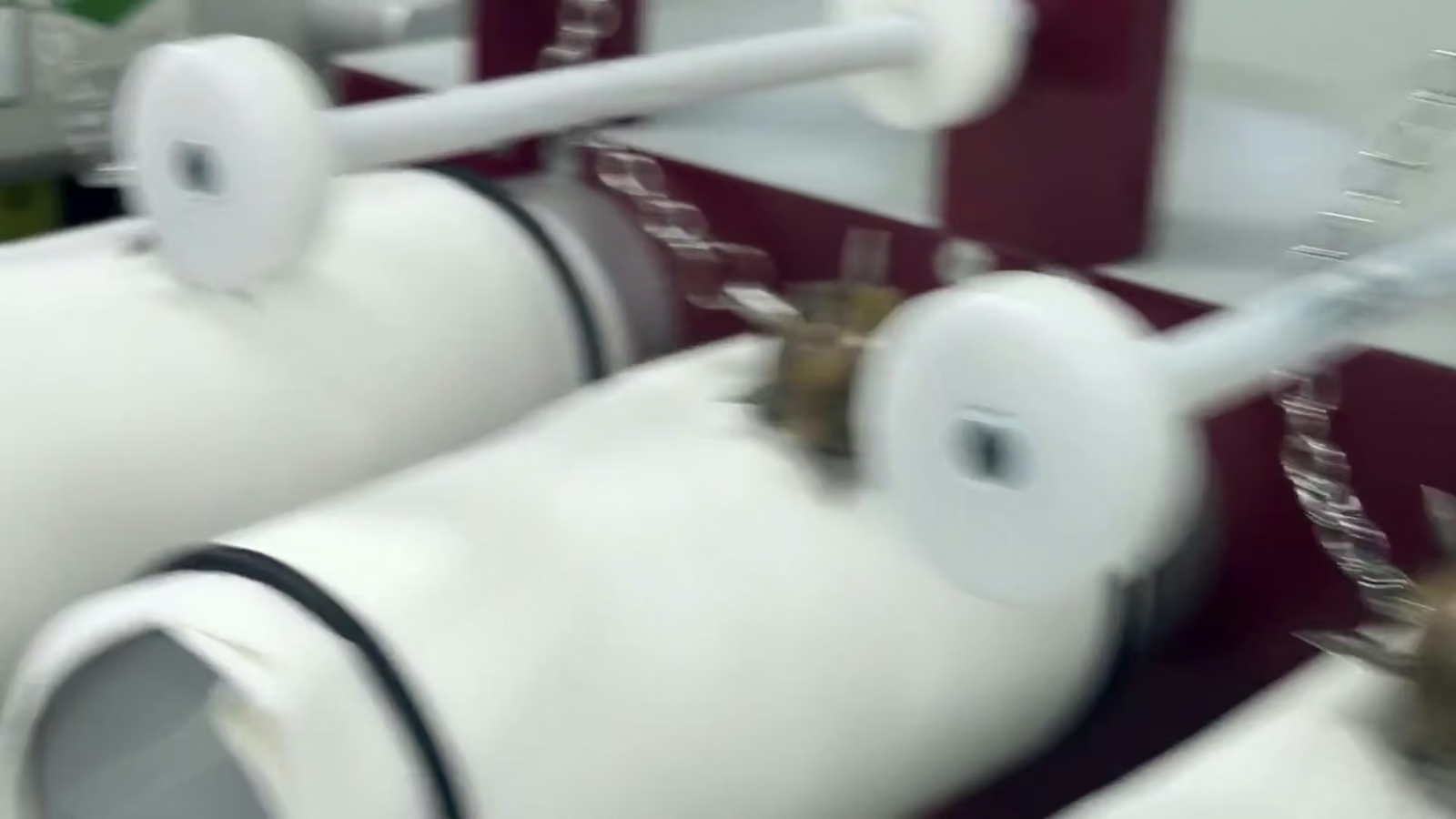
Fabric tubes turning on the rollers of a laboratory snag tester
Ohzehn Textiles Switching manufacturers
01 09
02 · Drift has a cause

Why a reorder comes back different

A reorder does not change by accident. Somewhere between the fiber and the finished garment, something was done differently. The symptom usually points at where.

Why a reorder comes back different
What you noticeWhere it often starts
Thinner, lighter or flatter hand The knit construction, the weight, or the finish
Colour off from the approved sample The dye lot or the dye recipe
Shrinks more after washing The finish, or how the fabric was relaxed before cutting
Stretch gives up sooner The fiber or the knit
Seams pucker, twist or pop The sewing, or a fabric the seam was not set up for
Ohzehn Textiles Drift has a cause
02 09
03 · Why it keeps happening

When fabric and sewing are split, nobody owns the drift.

Buy fabric from one supplier and sewing from another, and nobody owns the whole reorder. The mill says the fabric passed. The sewing line says it cut what it was sent. Both can be right, and the garment is still wrong.

Ohzehn operates through a group of facilities in Fuzhou that we own or hold ownership stakes in, knitting and finishing, dyeing, and an on-site testing lab, which lets us control fabric from fiber through to finished garment, dye to our own standards, and test in-house rather than waiting on an outside lab.

Fabric supplierSewing line
Fiber
Knit
Dye
Finish
Test
Cut and sew
Ohzehn Textiles Why it keeps happening
03 09
04 · Free, either way

Send us the garment that came back wrong.

We will read it in our lab and tell you why, before you owe us anything. Free, either way.

  1. Tell us about it. What it is, what changed, and whether you still have the approved sample.

  2. We email you where to send it.

  3. We read it in our lab.

  4. We tell you why it changed.

  5. You decide what to do next, with us or without us.

Ohzehn Textiles Free, either way
04 09
05 · Find the cause first. Then move.

How to switch clothing manufacturers without losing a season

Switches often go wrong because the brand moves before it knows why the last factory drifted. A new floor that does not know the cause can drift the same way.

  1. Keep the approved sample and a failed unit. They are your evidence, and a lab can read both.

  2. Find the cause before you move. Fiber, knit, dye, finish or sewing each point to a different fix.

  3. Get your tech pack, fabric spec and approved colour standard in writing, in your hands.

  4. Sample on the new floor against the approved piece, not against memory.

  5. Keep the current supplier running until the new sample passes. Switching mid-season is how brands lose one.

  6. Ask the new factory who knits the fabric, who dyes it and who tests it.

Ohzehn Textiles Find the cause first. Then move.
05 09
06 · What changes here

Big enough to hold those programs. Small enough to take yours.

Our mill supplies fabric to garment manufacturers producing for brands including Skims, Victoria's Secret, Calvin Klein and Tommy Hilfiger. Every batch is tested for BPA, PFAS, phthalates, heavy metals, formaldehyde and azo dyes, in an on-site lab the group part-owns. Your first order can run on fabric from the same floor.

Fabric from our mill has gone into garments for these brands, directly and through the garment makers who sew for them. Marks belong to their owners.

Ohzehn Textiles What changes here
06 09
07 · What we will not do

Quote you a number before we have seen the style.

We will not quote a minimum or a lead time off a web form. Fabric minimums and cut-and-sew minimums are different things, and we tell you which is which on the first call, against the garment you are actually making.

Ohzehn Textiles What we will not do
07 09
09 · FAQ

Questions about switching manufacturers.

How do I know if the problem is the factory or the fabric?

Read the garment. Put the approved sample and a failed unit side by side and the symptom usually points at the stage: hand and weight at the knit or finish, colour at the dye, shrinkage at the finish, stretch at the fiber or knit, seams at the sewing. Send us both and we will read them in our lab and tell you why, free.

What does the garment read cost?

Nothing. Send us the garment that came back wrong. We will read it in our lab and tell you why, before you owe us anything. Free, either way. There is no order attached to it and no obligation to switch. If the answer is that your current supplier can fix it, you will hear that too.

What should I send for a garment read?

The garment that came back wrong, and the approved sample if you still have it. Tell us what changed: hand-feel, colour, fit or stretch, shrinkage or seams. A tech pack helps if you have one. Fill in the form and we will email you where to send the pieces.

How long does it take to switch clothing manufacturers?

It depends on whether the fabric is being developed new, how many sampling rounds the style takes, and the lab. We quote the timeline against your style on a call rather than on this page. The safest switch keeps the current supplier running until the new sample passes against the approved piece.

Should I switch manufacturers mid-season?

Only if you have to. The safer move is to find the cause of the drift first, sample on the new floor against the approved piece, and keep the current supplier running until that sample passes. Moving everything at once, before you know why the reorder changed, is how brands lose a season.

Why switch to a mill instead of another cut-and-sew factory?

Because drift often starts in the fabric, and a cut-and-sew factory does not own the fabric. Ohzehn operates through a group of facilities in Fuzhou that we own or hold ownership stakes in: knitting and finishing, dyeing, and an on-site testing lab. That lets us control fabric from fiber to finished garment instead of cutting whatever arrives.

Ohzehn Textiles FAQ
09 09